
Running a Sex Offender Check in Dallas County
The official starting point is the Texas Public Sex Offender Registry. Texas Department of Public Safety manages the statewide system, while the registration authority depends on where the person resides. Municipal police generally handle residents inside a city. The Dallas County Sheriff is the relevant authority where applicable outside a municipal registration arrangement.
Choose a search based on what is known. A name search is useful when spelling and identity facts are available. A location search can use an address, city, ZIP Code, Dallas County filter, or radius control offered on the live form. Review the profile's update date and reporting agency, because the record can change after a move or verification.
The registry is not the Lew Sterrett jail lookup or a criminal case file at the Frank Crowley Courts Building. Dallas County Sheriff custody records, District Clerk felony files, and County Clerk misdemeanor files answer other questions. Use the registry for the public registration record, then consult the originating court only when the underlying judgment or case outcome must be understood.
Dallas County Registry Radius Limits
A radius result is a view of reported public registry data near the location entered. It is not a full safety finding for a Dallas County address. Data can lag, some circumstances affect public display, and a person outside the chosen distance will not appear in the same result set.
Use the map and list as awareness tools. Check whether the address was entered correctly, note the distance setting shown on the live form, and open each relevant profile rather than drawing a conclusion from a marker alone. Confirm the address status, verification details, and listed agency. A blank radius result does not establish that no risk exists in the area.
Searching the Texas Public Sex Offender Registry
The Texas Public Sex Offender Registry supports name and geographic searches. County filtering is especially useful when a city crosses county lines or when a Dallas County search should include more than Dallas city. The live form controls the exact choices, so no radius distance should be assumed without reading it.
- Open the DPS registry and read its conditions and public-safety notice before searching.
- Select name or location mode, then enter the known name, address, city, ZIP Code, or Dallas County filter.
- Review the result list or map and compare identifiers carefully before choosing a profile.
- Open the full profile and read the address status, offense, registration details, update information, and reporting-agency contact.
| Field or control | Type | When used | Notes |
|---|---|---|---|
| Search type | Tabs or options | Required | Select name or geographic mode |
| Last and first name | Text | Name mode | First name can narrow a common surname |
| Address | Text | Location mode | Use a specific street or address input |
| City and ZIP Code | Text or dropdown | Optional | Use Dallas, Irving, Garland, or the relevant ZIP |
| County | Dropdown | Optional | Select Dallas County for countywide results |
| Radius | Dropdown | Location mode | Read the live offered distances; do not assume one |
| Map and list | Result controls | After search | Geographic presentation where enabled |
This captured interface comes from the official Texas DPS registry search.
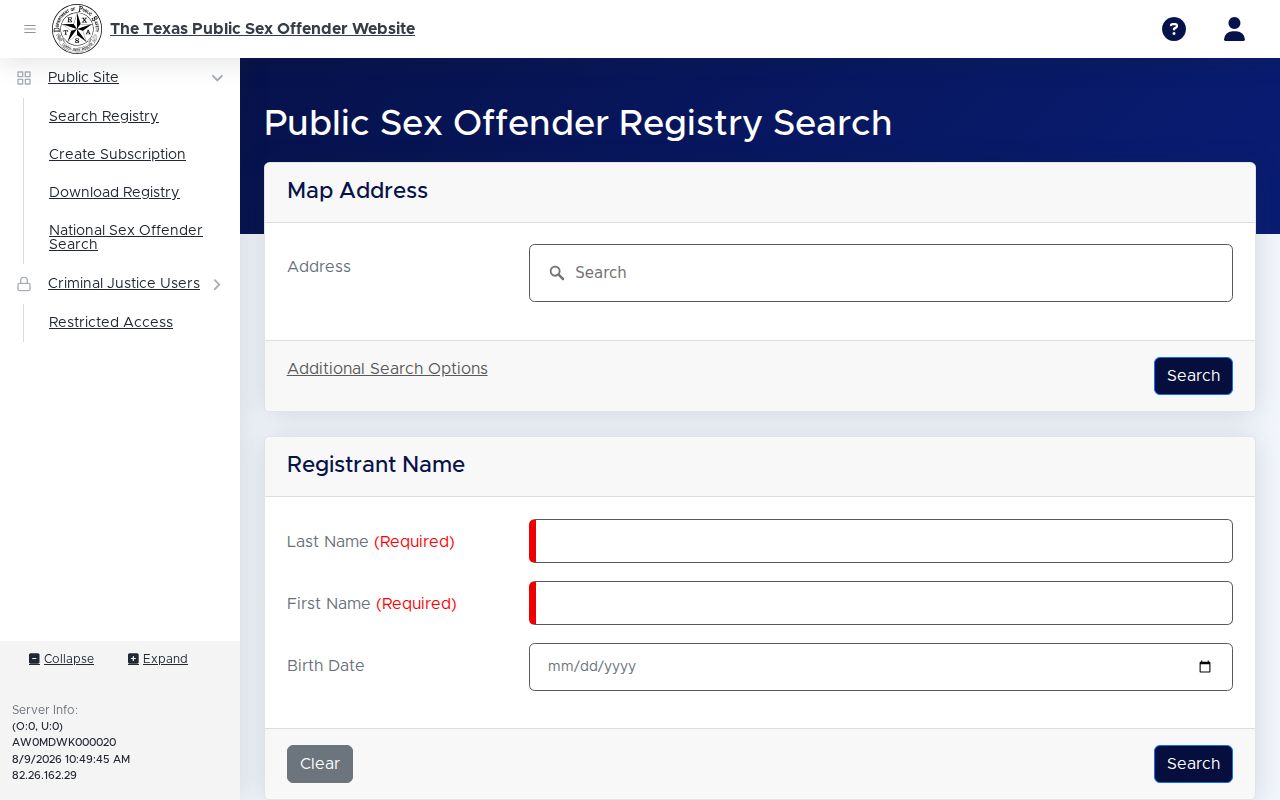
The official form should be checked each time because its controls and displayed status are the current source for a Dallas County registry search.
Dallas County Registry and National Searches
DPS is the direct Texas layer for Dallas County addresses and reporting information. The Department of Justice National Sex Offender Public Website adds a cross-state search across participating jurisdictions. It is useful when a person may have moved or when the relevant location is outside Texas.
These tools overlap, but neither should be treated as a substitute for the other in every case. Begin with DPS for Texas details, then use NSOPW when the search question crosses state lines. If the results differ, compare update dates and agencies rather than assuming one record cancels the other.
The national layer shown here is sourced from the official NSOPW search.
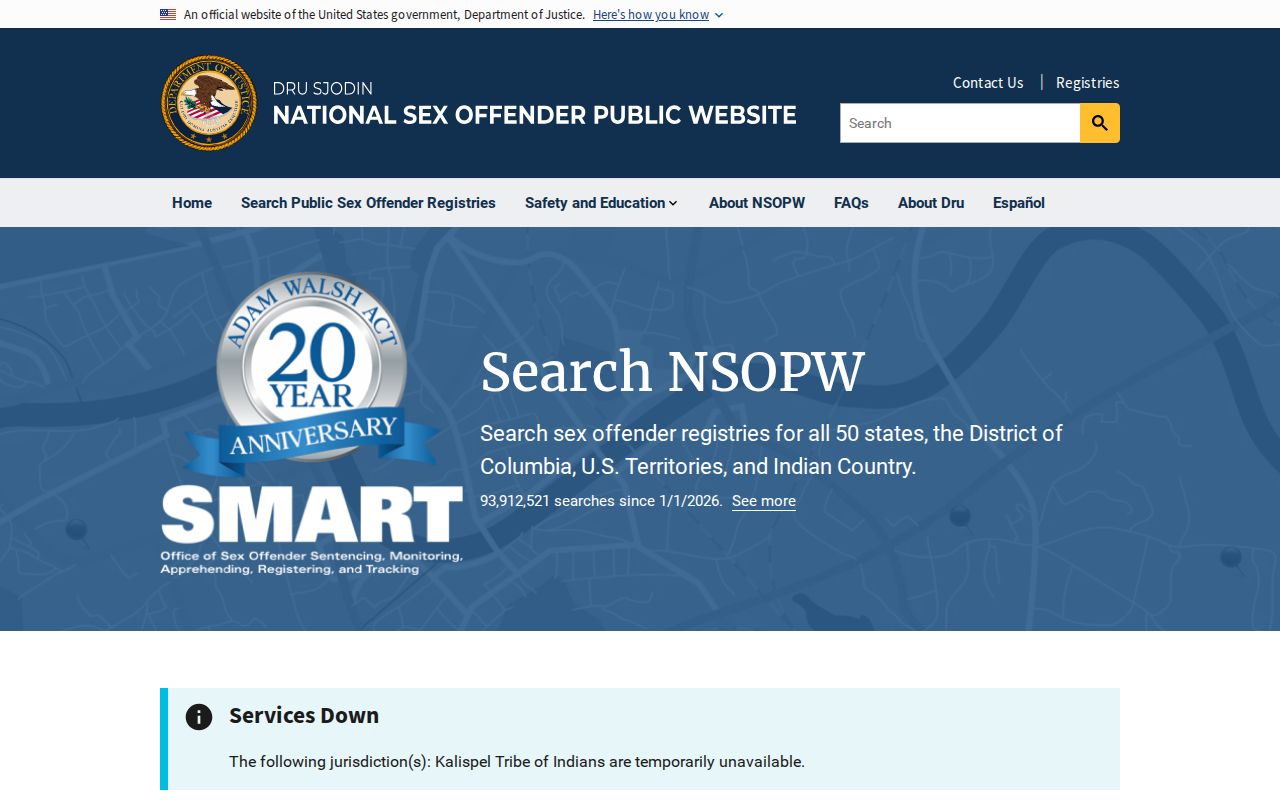
NSOPW broadens geographic coverage while the Texas profile remains the better place to inspect a current Texas registration record.
What a Registry Profile Shows
A profile joins identity, physical description, location, offense, and registration information. It can include a photo, legal name, aliases, date of birth or age, height, weight, hair, eyes, and public address status. Read the entire entry because no single field establishes identity or present risk.
| Name and Aliases | Legal name plus listed alternate names |
|---|---|
| Photo and Description | Photo, sex, race, age or birth information, height, weight, hair, eyes, and marks when displayed |
| Registered Location | Public registered address and status as shown by the registry |
| Offense Record | Description or statute, conviction or adjudication date, and jurisdiction |
| Registration Details | Verification information, compliance status, and reporting agency contact |
| Other Public Fields | Vehicle, school, work, victim category, scars, marks, or tattoos where legally displayed and supplied |
Not every Dallas County profile has every possible field. A blank vehicle or mark field does not prove that the information is unknown or does not exist. It means only that the public profile did not display a value at the time reviewed.
Outdated Dallas County Registry Addresses
Start with the profile update and verification details. Then identify the registration agency printed on the record. Residence determines the primary authority, so a Dallas city resident generally reports through Dallas Police, while another municipality or the Sheriff may be responsible elsewhere in Dallas County.
Report a suspected compliance issue to the listed registration agency or local police without confronting the person. Use 911 only for an emergency. For a Dallas city appointment or office location, confirm current details with DPD before travel; its ordinary report requests use the separate City of Dallas public-information channel. The Dallas County Sheriff's Office main office is at 133 N. Riverfront Boulevard and its main number is (214) 749-8641. The Dallas County directory can confirm the current county office route.
An old-looking address does not, by itself, establish a violation. The person may have reported a change that has not yet appeared publicly, the address status may use wording that needs context, or another registration authority may now be responsible. Give law enforcement the profile link, the date it was viewed, and the specific fact that raised concern. That lets the Dallas County agency compare the public entry with its official registration file.
Registration Requirements and Levels in Texas
Texas does not present every public profile through a simple Tier I, II, or III chart. The legal duration turns on the reportable offense and circumstances. For some duties the end date is calculated from the later of release, supervision discharge, or another stated event. Read the actual profile and governing law rather than assigning a generic tier.
| Texas category | Duration stated by DPS | Public interpretation |
|---|---|---|
| Adult lifetime offense | Life | Includes listed sexually violent and other qualifying or repeat offenses under Article 62.101 |
| Other adult reportable offense | Until the tenth anniversary after the latest listed release, discharge, or dismissal event | The later event controls |
| Juvenile adjudication | Generally ten years after disposition or completion, whichever is later | Depends on the adjudication and completion date |
| Transferred juvenile case | Generally ten years after the latest applicable release, supervision discharge, dismissal, or discharge | Read the specific case path |
| Extrajurisdictional registrant | Until the applicable originating, federal, or UCMJ rule expires | The outside rule can control duration |
The official DPS registration FAQ explains the ten-year and lifetime framework.
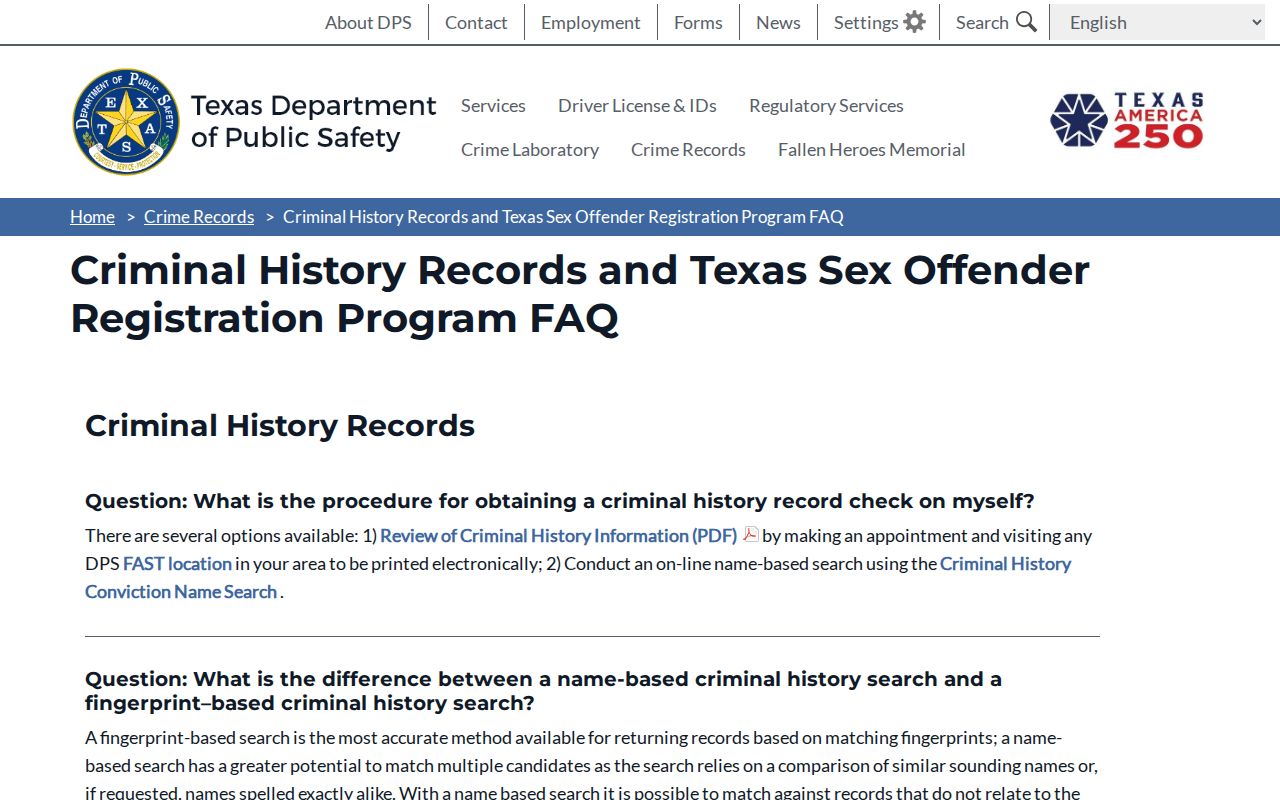
The FAQ is a better basis for Dallas County duration questions than a generic national tier chart.
Dallas County Registry History Since 1991
Texas registration began on September 1, 1991. DPS also explains retroactive coverage for certain reportable convictions or adjudications dating to September 1, 1970 when the person remained in the justice system for that offense on or after September 1, 1997. That history helps explain why an older offense may appear in a current Dallas County profile.
An adult moving out of Texas generally has an advance in-person reporting duty and must also comply with the destination state's timing. The exact obligation follows the law and individual record. A searcher should not infer that an older conviction has expired merely from its date, or that a move ends registration.
The ten-year language also requires care. For an adult reportable offense in that category, the tenth anniversary runs from the latest applicable dismissal or discharge, release from a penal institution, or discharge from supervision. A sentence date alone may therefore be the wrong starting point. Dallas County readers should compare the profile with the judgment and supervision or release history before trying to calculate an end date.
Lawful Use and Community Notification
Registry information supports personal, family, and community awareness. It does not authorize confrontation or punishment. If a Dallas County record suggests noncompliance, save the profile details and contact the listed agency. Let law enforcement verify the facts and decide the next step.
Registry misuse is a crime: Texas Code of Criminal Procedure Chapter 62, including Article 62.005, restricts misuse of registry information. Do not use it to threaten, harass, intimidate, or commit any unlawful act against a registrant or household.
The governing source shown here is the official Texas Code of Criminal Procedure Chapter 62.
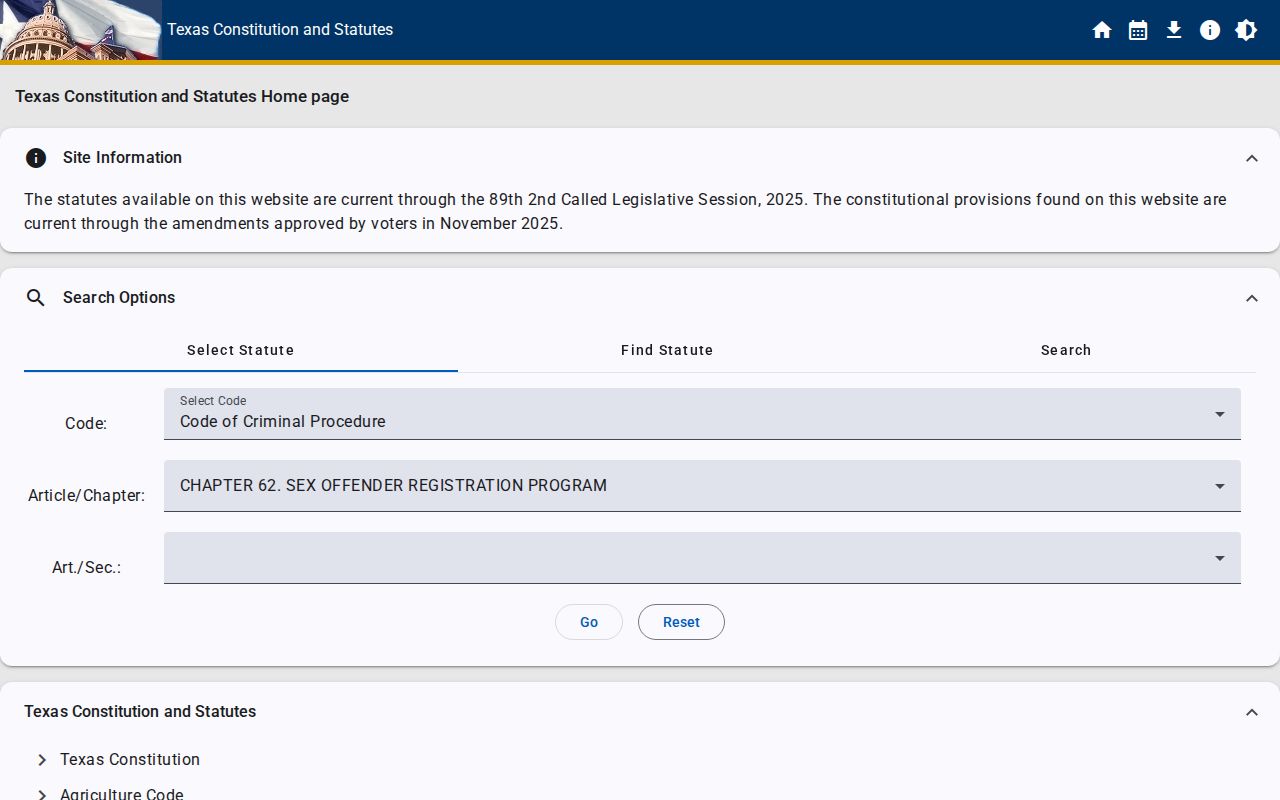
That statute supplies the legal frame for registration, public information, duration, and lawful handling of Dallas County registry results.
Use the registry as one part of a practical safety plan. Read the offense and jurisdiction fields, confirm the reporting agency, and note when the profile was last updated. If the underlying case matters, obtain the judgment from the court rather than treating the short registry description as the whole record. The registry reports a legal registration status; it is not a substitute for the complete criminal case file.