
Arrest History in Dallas County
Dallas County arrest records begin with the agency that takes a person into custody. The Dallas County Sheriff, Dallas Police, Irving Police, Garland Police, county constables, Texas DPS Highway Patrol, DART Police, and campus departments each create their own reports. No single county archive combines all of those reports. The Sheriff's Legal Department directs a requester to the agency that generated the incident or arrest record.
A separate booking file begins when jail staff receive a person at the Lew Sterrett complex. Fingerprints connect the event to the Texas Department of Public Safety Computerized Criminal History system. If the prosecutor files a case, the clerk opens another record. Those layers can diverge because initial booking charges may be changed, rejected, dismissed, or resolved later. Dallas County arrest history must therefore be read as a set of linked records, not as a list of convictions.
New Dallas County Booking Search
The official Dallas County Sheriff Inmate Information page is the access point for the current jail lookup. Search by legal last name and first name, or use the booking number when known. That number is the more precise key. A matching result can show current custody, booking time, facility, alleged charges, bond details, and linked case or warrant identifiers.
The manifest assigns the official Sheriff's inmate-information source image to Dallas County arrest history.
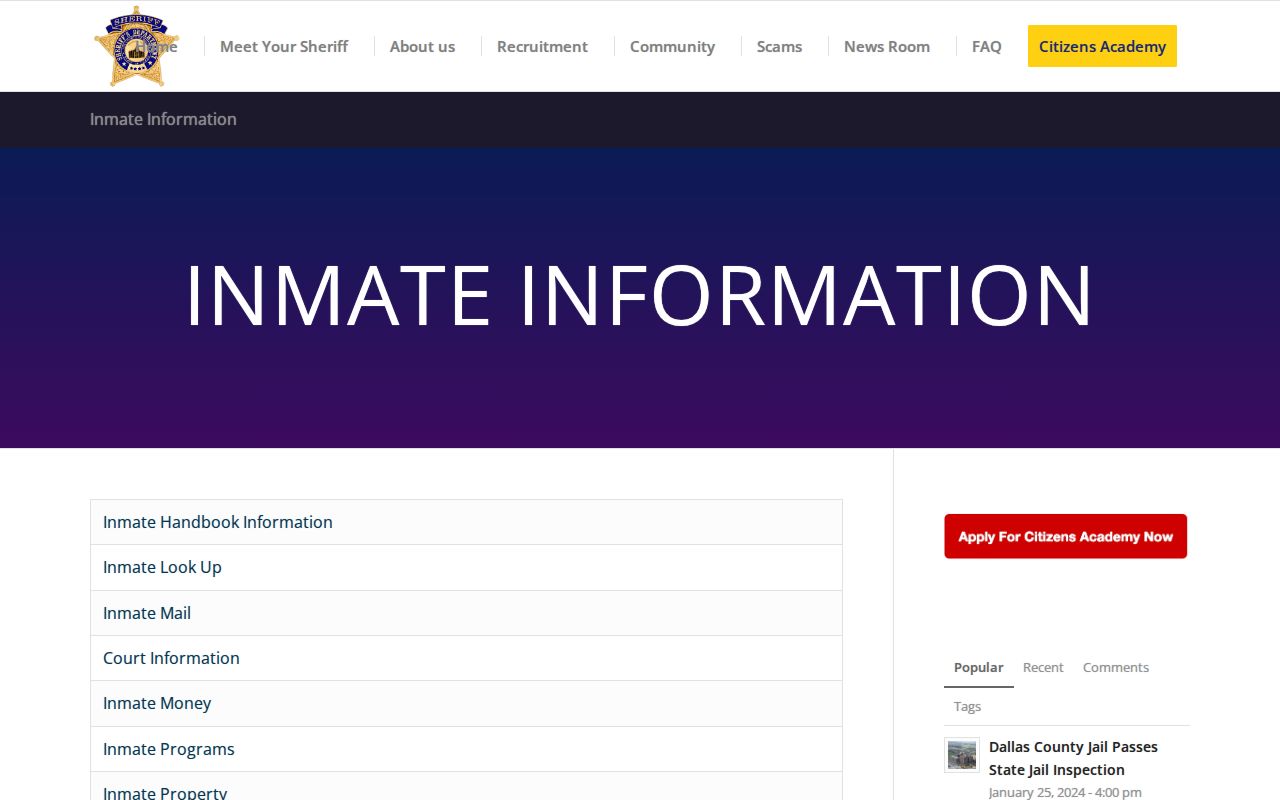
The lookup is built for current or recent custody. A record may disappear after release or transfer, so a blank result does not prove that no arrest occurred.
How to Look Up Dallas County Arrests
Use the channel that matches the stage and record needed. The jail answers current custody. The arresting agency owns its report. The court clerk tracks filed charges. Texas DPS holds the statewide repository slice, while a written request can reach releasable records that are not posted online. Phone confirmation matters when custody or warrant status can change quickly.
- Search the Dallas County jail lookup by name or booking number. If the result is unclear, call inmate information at (214) 761-9025 or warrant information at (214) 761-9026.
- Identify the arresting agency from the booking entry. Request a Sheriff's deputy report from DSO, a Dallas Police report through the City of Dallas, or an Irving, Garland, constable, DPS, DART, or campus report from its own records channel.
- Search Dallas County felony and misdemeanor court history after a charge has had time to be filed. The Dallas County criminal court case record carries the disposition rather than the booking page.
- Use the Texas DPS public conviction name search for reported Texas convictions and deferred adjudications. For one's own identity-linked history, follow the DPS FAST fingerprint personal-review process.
- Submit a Dallas County Sheriff request through GovQA, email, mail, fax, or the first-floor counter when online results do not supply the releasable booking or deputy record needed.
The Sheriff provides an official GovQA public-information request portal, shown through its assigned manifest image.
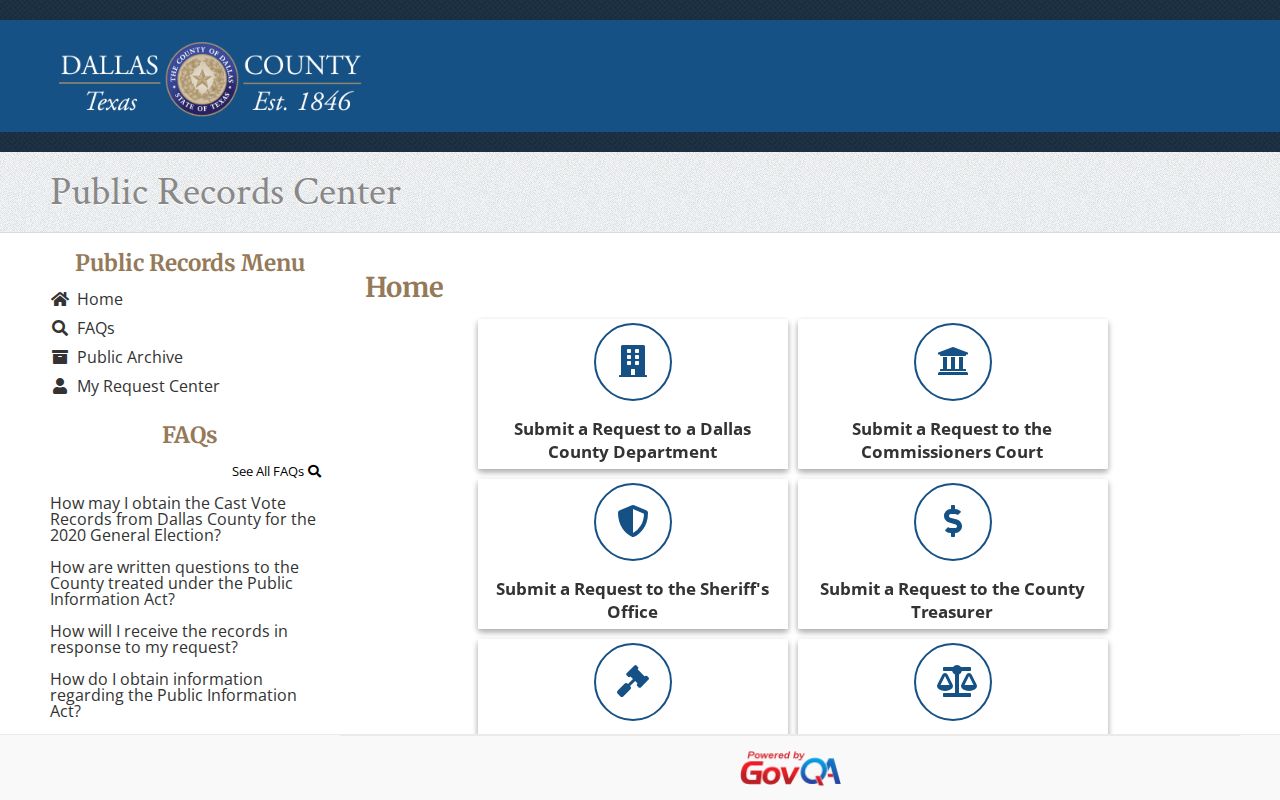
That formal route creates a trackable request when current-custody search and phone channels cannot answer the records question.
Dallas County Arrest Report Owners
Agency ownership is the main local trap. The Dallas County Sheriff controls deputy reports and DSO-held jail or booking records. Dallas Police reports go through the City of Dallas public-information channel. Irving uses its city police request process. Garland routes police records through its Records Division and JustFOIA, with the unit at 1891 Forest Lane, (972) 205-1657. The constable precinct, Texas DPS, DART Police, or a campus department keeps the report it created.
The Sheriff's Legal Advisor public-record guidance states that routing rule, and the related manifest image appears below.
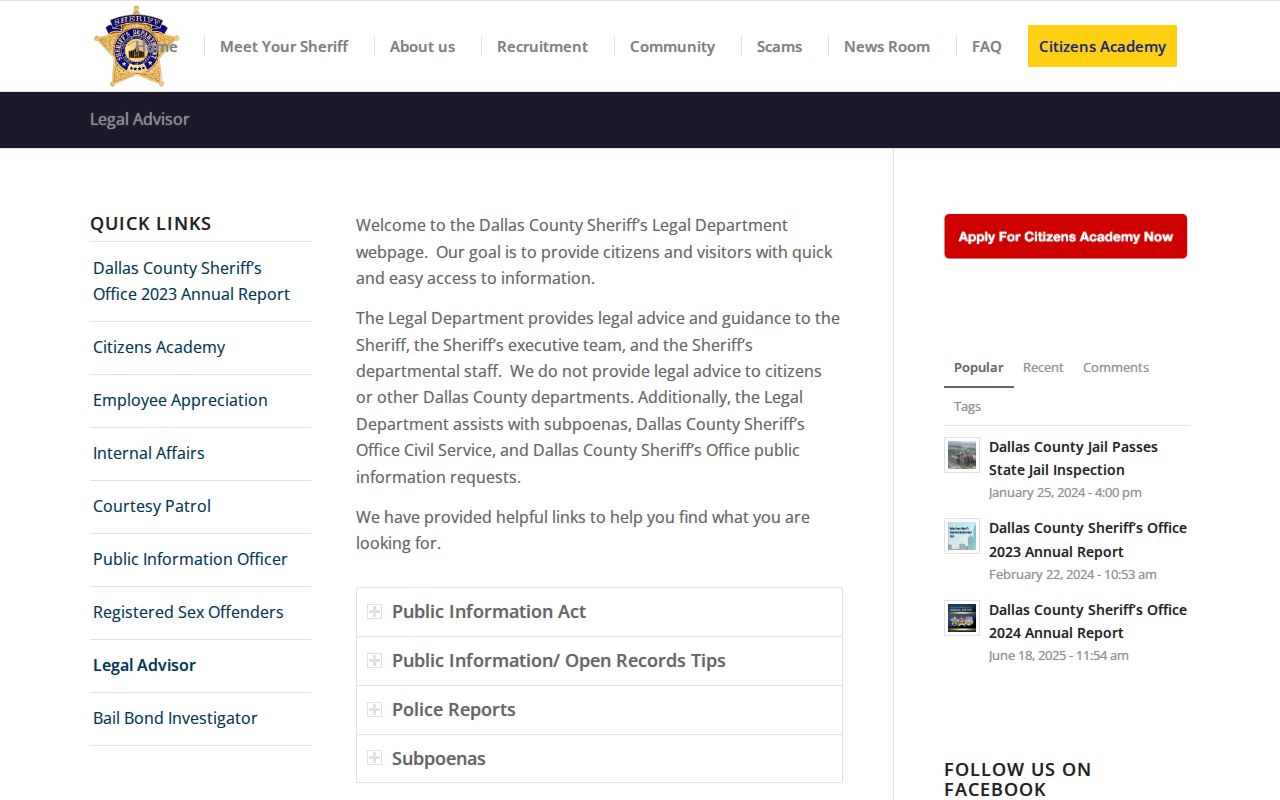
The form should describe an existing record with names, dates, times, places, and any report or booking number. It should not ask the agency to research a legal issue. The form says a response is usually received within ten days, but the Attorney General deadline is not a promise that all records will arrive by then.
Dallas County Sheriff's Legal Department
Frank Crowley Courts Building, first floor
133 N. Riverfront Blvd., LB-31
Dallas, TX 75207-4313
Email: SheriffOpenRecords@dallascounty.org
(214) 653-3450
Fax: (214) 653-3420
What an Arrest Record Shows
A Dallas County arrest can yield an officer report, jail booking entry, fingerprint tracking event, magistrate record, and later court cause number. The fields below describe the public booking and arrest information documented in the research. Availability can change with redaction, the current display, and whether the requested item belongs to the Sheriff or another agency.
| Booking Number | Local identifier for the Dallas County intake event and the most exact jail-search key. |
|---|---|
| Booking Date & Time | Shows when the jail accepted and recorded the person in custody. |
| Arresting Agency | Identifies which department created the arrest or incident report. |
| Arrest Basis | May identify a warrant number or the stated basis for a warrantless arrest. |
| Charges | Lists alleged booking offenses, which can differ from charges later filed in court. |
| Bond & Holds | May state amount, type, status, or an unresolved hold when publicly shown. |
| Custody Location | Names the Dallas County facility or current status at the time of the result. |
| Photo & Descriptors | Booking image and demographic display can vary under current access rules; no image is reproduced here. |
| Release Status | May reflect bond, court order, sentence completion, or transfer; confirm by phone. |
Medical screening, suicide-watch information, and confidential jail classifications should not be assumed public. The visible booking entry is only the releasable part of a larger custody file.
Dallas County Intake and Magistration
At Lew Sterrett intake, staff establish identity, inventory property, photograph and fingerprint the arrested person, record the agency and alleged charges, conduct medical and mental-health screening, and assign custody placement. Texas Code of Criminal Procedure Article 15.17 requires an arrested person to be taken before a magistrate without unnecessary delay and generally within 48 hours. The magistrate gives required warnings, addresses counsel, and sets bond or conditions when law permits.
The official Dallas County detention centers page identifies the Intake/Release Center, North Tower, West Tower, and Suzanne L. Kays facilities. Its manifest image is included here.
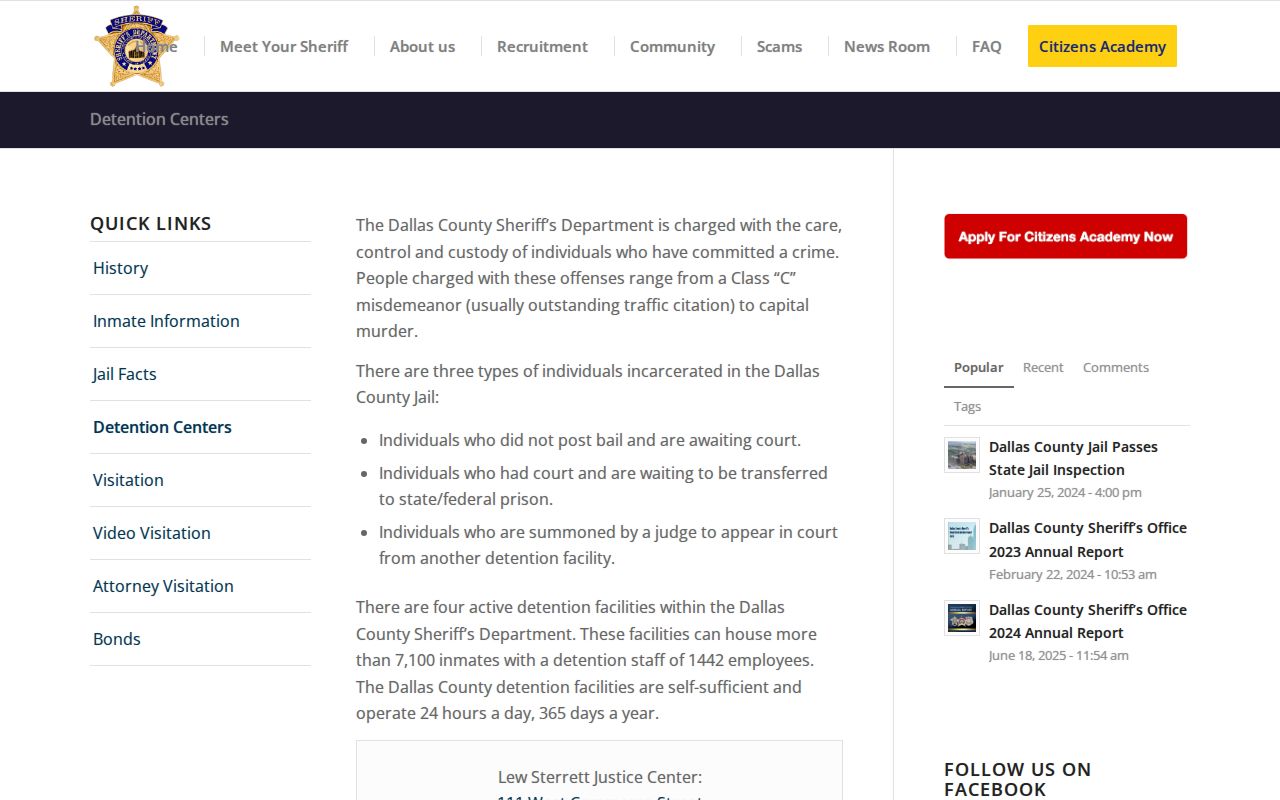
A facility field can change as custody classification needs are assessed. It describes location, not the strength or outcome of the criminal allegation.
Recent Arrests and Booking Logs
Dallas County did not publish a separate complete daily arrest blotter or official mugshot gallery in the reviewed sources. The jail lookup is the operational source for recent custody. Sheriff news releases and official agency feeds cover selected incidents, not every booking. Commercial galleries are not a substitute for the Sheriff's current record or an agency report.
Recent results have sharp limits. A person who bonded out may no longer appear, while the court case continues. Transfer to state custody can also remove a person from the county lookup. A missing result says nothing by itself about prior arrest history. Use the booking number when available, confirm live status at (214) 761-9025, request a releasable booking record through DSO, and check the filed case through the proper clerk.
Note: Dallas County's live jail lookup shows custody status, not a complete historic list of all arrests tied to a name.
Blank Dallas County Custody Search
A blank jail result calls for a change of channel, not a conclusion. First check spelling and whether a booking number is available. Then call the inmate line because a very recent intake, release, or facility transfer can affect the web display. If the arrest led to prosecution, search the county court index for a cause number and filed charge. That record may persist after the jail entry rolls off.
If the person moved to state prison or a displayed state-supervision status, switch to the TDCJ Inmate Information Search. Dallas-area parole field offices are listed by the TDCJ Parole Division Region II directory, which is represented by the assigned image below.
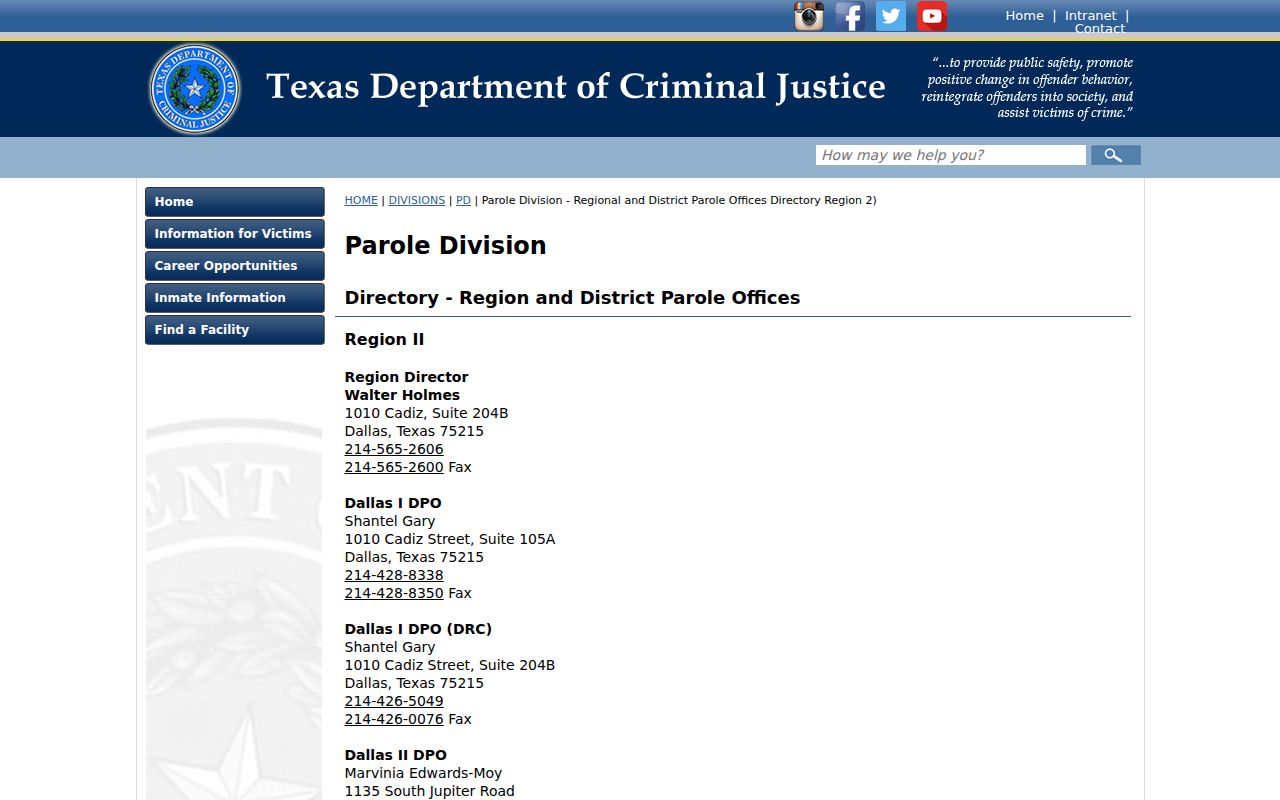
County jail, state prison, and parole records describe different forms of custody or supervision, so each locator must be read at its own level.
Arrests vs Convictions
An arrest entry proves that an agency took and recorded a person in custody. It does not prove the alleged conduct, and it does not tell whether prosecutors filed the same charge. A conviction is a court judgment of guilt. The court clerk maintains that outcome, while Texas DPS may receive and display reported conviction or deferred-adjudication data in its statewide system.
| Point | Arrest Record | Conviction Record |
|---|---|---|
| Created by | Arresting agency and booking jail | Trial court and clerk |
| What it establishes | An arrest and booking event occurred | The court entered a judgment of guilt |
| Where it lives | Agency report, Dallas County jail file, and reported DPS arrest cycle | Court file and reported DPS repository history |
| Possible next result | Release, no charge, dismissal, acquittal, deferred case, or conviction | Sentence, appeal, or qualifying record relief |
Note: An arrest is not proof of guilt, and a booking charge may never become the charge filed or resolved in court.
Dallas County Booking to DPS
Fingerprints and a tracking control number connect a Dallas County arrest event to the Texas DPS Computerized Criminal History system. The arresting agency and jail submit identity and event data. Prosecutors may later change what is charged, and courts report dispositions back to DPS. A repository entry is therefore assembled from agency submissions rather than copied from one jail screen.
Reporting gaps can occur. A disposition may lag or be missing, and a name-based search can merge or miss people with similar identifiers. The DPS public product includes reported Texas convictions and deferred adjudications available under law, but a $1 search credit and a date of birth still do not make it a fingerprint identity match. One's own complete identity-linked review uses Texas FAST fingerprints through IdentoGO.
When Dallas County booking data remain after a dismissal, the record has not necessarily been mishandled. Dismissal ends the charge without conviction but does not automatically erase the arrest report or booking. Qualifying removal depends on expunction under Texas Code of Criminal Procedure Chapter 55A. An order of nondisclosure is a different remedy that restricts public disclosure while preserving authorized access.